
Thank you for taking the time to learn more about SM Energy’s pipeline operations in your area.
Our pipelines may go largely unnoticed, but they play an important role in safely transporting energy across the Permian Basin, DJ Basin, South Texas, and Uinta Basin. SM Energy is committed to safely operating and maintaining this infrastructure while providing you with the information you need to dig safely and recognize and respond to a possible pipeline release.
SM Energy Pipeline Safety Public Awareness
Do you know how to handle a gas leak?

Call Before You Dig
State law requires that anyone planning on engaging in excavation activities must contact 811 three business days prior to excavation to have underground facilities marked for safety.
This service is free to all excavators; don’t assume you know where underground facilities are located or the depth of such facilities. Damaging a gas or electric line, even with a shovel, can and has resulted in severe injury or death.
Operators of underground facilities in public rights-of-way (which may include a portion of your property) are required to mark the facilities in the area in which excavation is planned at no cost to the requester year-round.
Staying Safe in Your Neighborhood
How to Recognize a Leak
Even though pipelines have an exceptional safety record, a leak may occur. Indications of a leak might include:

Smell
A strange or unusual odor in the vicinity of the pipeline. DO NOT depend on your sense of smell for indicating the continuing presence of any gas or for warning of hazardous concentrations.

Hear
A hissing or roaring sound (caused by a product escaping from a pipeline).

See
Dirt flying in the air over or near a pipeline or bubbling in water. An ice ball on the ground in warm weather, pooling of liquid or a dense white vapor/fog over where a pipeline is located. Flames originating from an opening in the ground, dead vegetation, open flames near exposed pipeline.
Pipelines in Your Neighborhood
Pipelines may be located within or near your community, transporting natural gas, crude oil, petroleum products, and other energy resources. Pipelines are one of the safest and most efficient ways to transport these products, and operators use multiple layers of protection to help maintain the safety and integrity of their systems.
These safety measures may include:
Compliance with applicable U.S. Department of Transportation (DOT) regulations
Routine pipeline patrols, inspections, and maintenance to identify potential issues
Clearly visible pipeline markers that identify the operator and provide emergency contact information
Ongoing monitoring and integrity-management programs
Emergency response plans developed in coordination with local emergency officials and first responders
Training and preparedness activities designed to support a safe, coordinated response in the unlikely event of a pipeline emergency
If You Suspect a Leak
LEAVE THE AREA IMMEDIATELY. MOVE UPWIND AND AWAY FROM THE SUSPECTED LEAK.
Call 911 first, then contact SM Energy:
Windsor Command Center:
303-294-7895Permian Command Center:
432-895-0179
Do not attempt to locate the source of the leak, stop the leak, or operate pipeline valves or equipment.
Do not start a vehicle, use electrical switches, operate machinery, light a match, smoke, or create any other potential source of ignition near the suspected leak.
Avoid contact with escaping gas, liquids, vapors, or any materials released from the pipeline.
Warn others to stay away from the area, but do not re-enter the area yourself.
From a safe location, provide emergency responders and SM Energy with as much information as possible, including the location of the suspected leak, what you observed, and your contact information.
Never assume someone else has reported the emergency. If you see, hear, or smell signs of a possible leak, leave the area and make the call.
Hazards of Pipeline Products
Pipelines may transport natural gas, crude oil, petroleum products, and other energy-related materials. If a release occurs, these products can present different hazards depending on the material involved, the size of the release, and surrounding conditions.
Some pipeline products may be highly flammable and can ignite if exposed to a spark, flame, or other source of heat. Vapors may also accumulate in low-lying or enclosed areas and create a dangerous atmosphere. Other products may be harmful if inhaled or may cause irritation to the eyes, skin, or respiratory system. In some situations, exposure can result in dizziness, nausea, difficulty breathing, or other serious health effects.
A pipeline release can also affect nearby soil, water, vegetation, wildlife, and property. For these reasons, members of the public should never approach, touch, or attempt to contain a suspected release.
Understanding the potential hazards of pipeline products—and knowing how to recognize the signs of a possible leak—is an important part of staying safe and helping protect your community and the environment.
How Do I Know Where the Pipeline is Located?
The best way to identify the location of all underground facilities in a planned excavation area is to submit a locate request from 811. Many pipelines are not identifiable above ground.
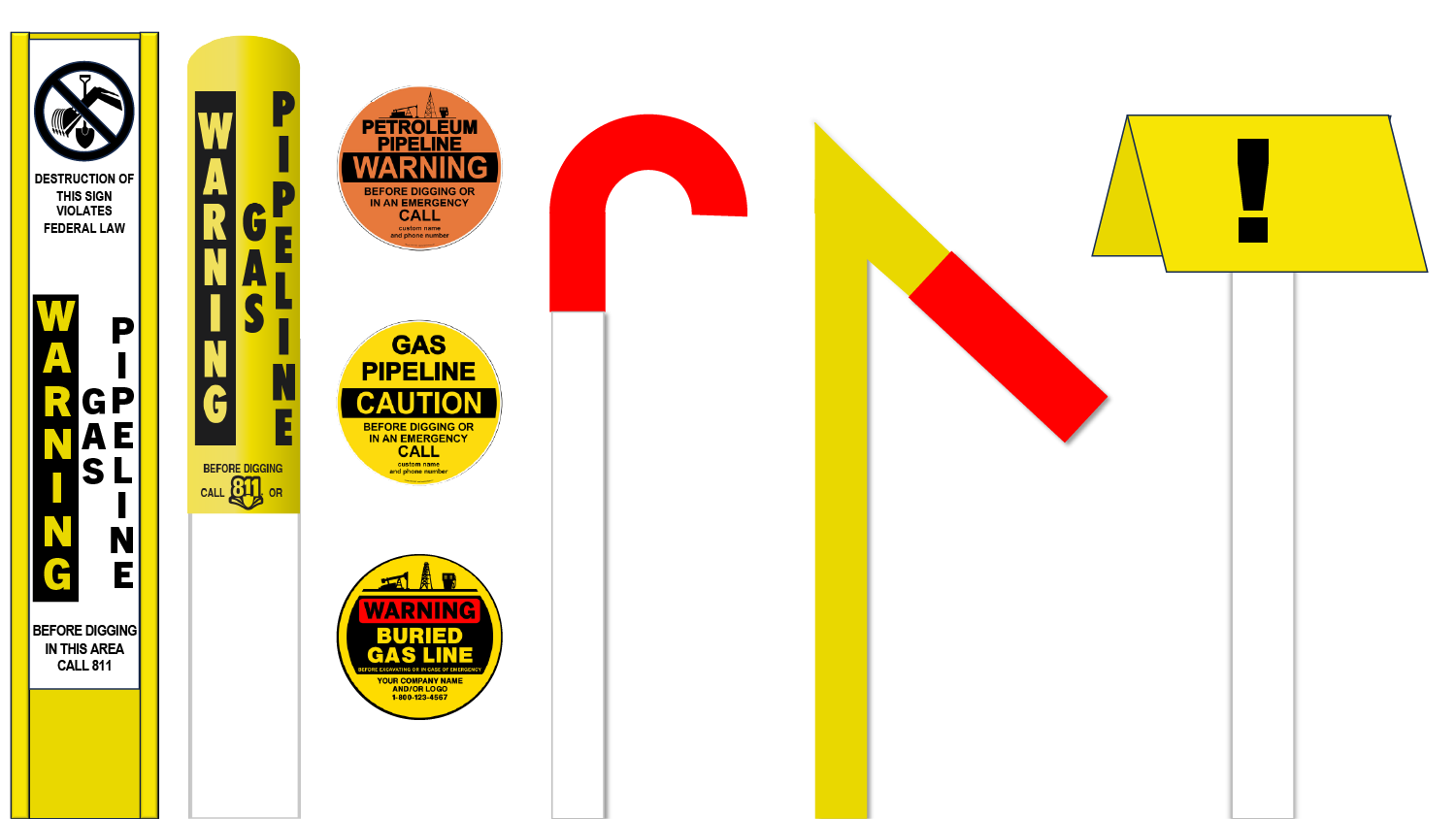
Above-Ground Pipeline Markers
Some pipelines, known as transmission lines due to their higher pressure, are identifiable by pipeline markers that are installed above ground periodically and at intersections with railroads, highways, and waterways. These markers come in a variety of shapes and colors.
It is important to recognize that these markers identify the approximate location of a pipeline right-of-way, which may be many feet wide, and that the marker is often not directly above the pipeline. Never use permanent pipeline markers as an indication of where to dig; always call for a facility locate request from 811.
Find Pipelines Near You
For a high-level overview of transmission and hazardous liquids pipelines, the Pipeline and Hazardous Material Safety Administration maintains a public pipeline map viewer here.
The NPMS map does not show distribution lines or service lines or non-jurisdictional lines on private property. Never use the NPMS map to determine where it is safe to excavate. Always call 811 before you dig for the most up-to-date and accurate information about pipeline locations.
SM Energy is Here to Help
SM Energy is committed to safely and responsibly developing the energy resources that help power communities and support our nation’s energy needs across the Permian Basin, DJ Basin, South Texas, and Uinta Basin.
Safely and Responsibly Delivering American Energy
SM Energy develops oil and natural gas resources with a strong focus on safety, operational integrity, regulatory compliance, and environmental responsibility. We work to protect our employees, contractors, communities, and the environment while helping provide the reliable domestic energy supply people and businesses depend on every day.